
How to Wash Concrete Driveways and Walkways
This guide teaches beginners how to properly pressure wash concrete surfaces. We cover essential prep, walk you through the washing method (we utilize the circle method), and show common growths and damage to avoid. Let’s dive in.
What Typically Grows on Concrete?
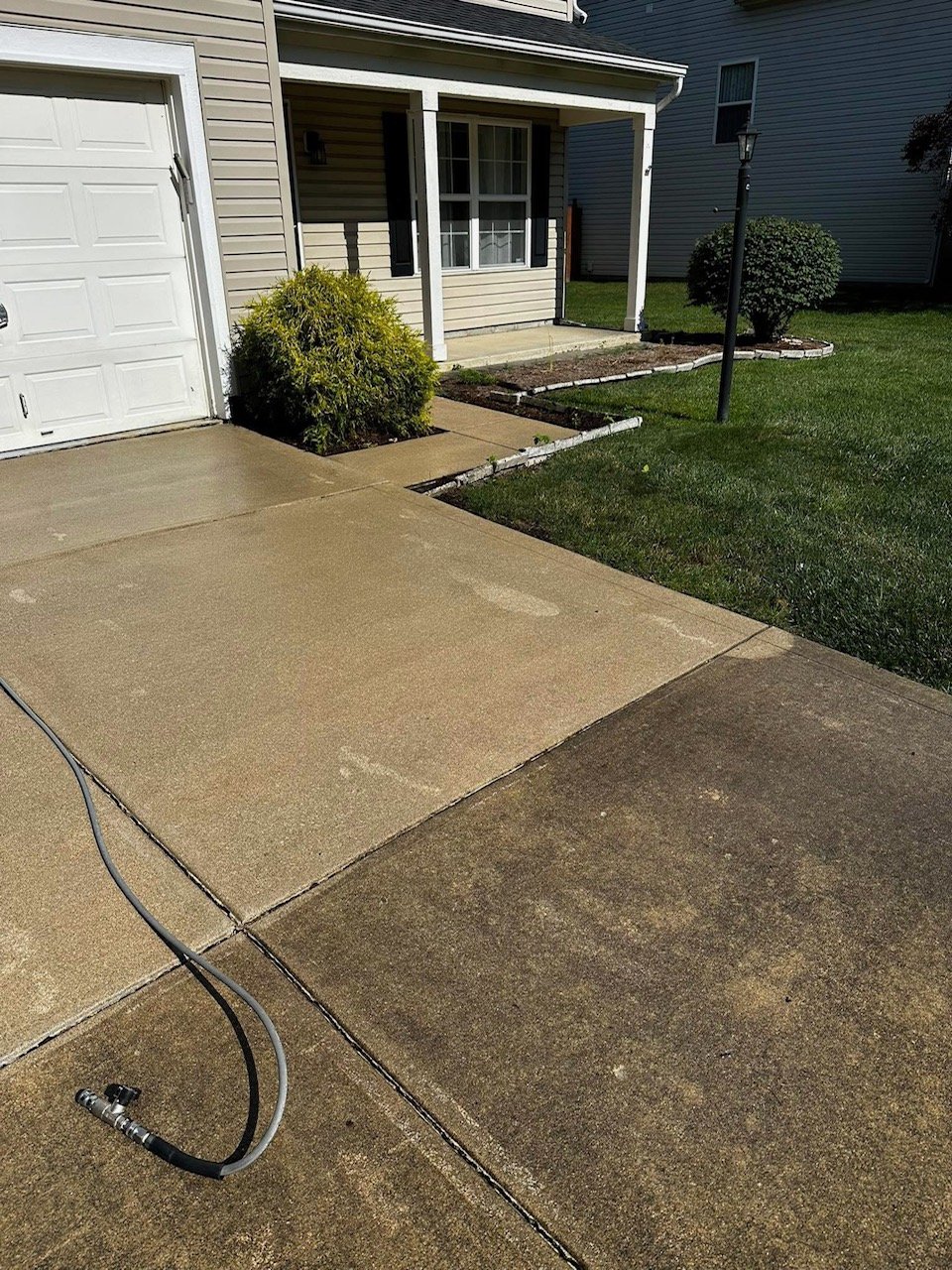
Concrete driveways and sidewalks are prone to buildup over time. Here’s what you'll likely see:
- Algae: Green and slippery in shaded, moist areas.
- Mildew: Often shows up black or gray, especially near vegetation.
- Mold: Dark, blotchy spots, often near trees or gutters.
- Dirt, pollen, and tire marks: Create a dull, patchy look.
Pre-Wash Checklist
Before you start cleaning, run through this quick but essential checklist:
- Inspect Equipment: Make sure your surface cleaner, wand, and tips are functioning properly. Check for clogs in all spray tips.
- Verify Pressure: Use the correct PSI for the surface. If concrete is newer than 4 years, lower pressure to prevent damage.
- Identify Damage Risks: Look for crumbling, spalling, or previously patched areas. Avoid high pressure in these zones.
Examples of Concrete Damage

Example 1: Clogged tip in surface cleaner

Example 2: Too much pressure on newer concrete
Pressure Washing Process
Follow these steps for the best results using the circle method:
- Spray Down First: Wet the entire area with clean water to cool it and help the pre-treatment stick.
- Apply Pre-Treatment: Use SH (1-2%) to break down organic growth. Wear a respirator to ensure your safety.
- Cut In the Edges: Use a green tip or J-rod to hit corners, cracks, and edges the surface cleaner won’t reach.
- Use the Circle Method: With your surface cleaner, start at the top and work in overlapping 3-foot circles. Overlap each circle by 50% for even coverage.
- Work in Sections: Clean small sections at a time to avoid letting dirt dry back onto the concrete.
- Final Rinse: Use your wand or ball valve to rinse off all debris, especially in expansion joints and along the curb.
Before and After
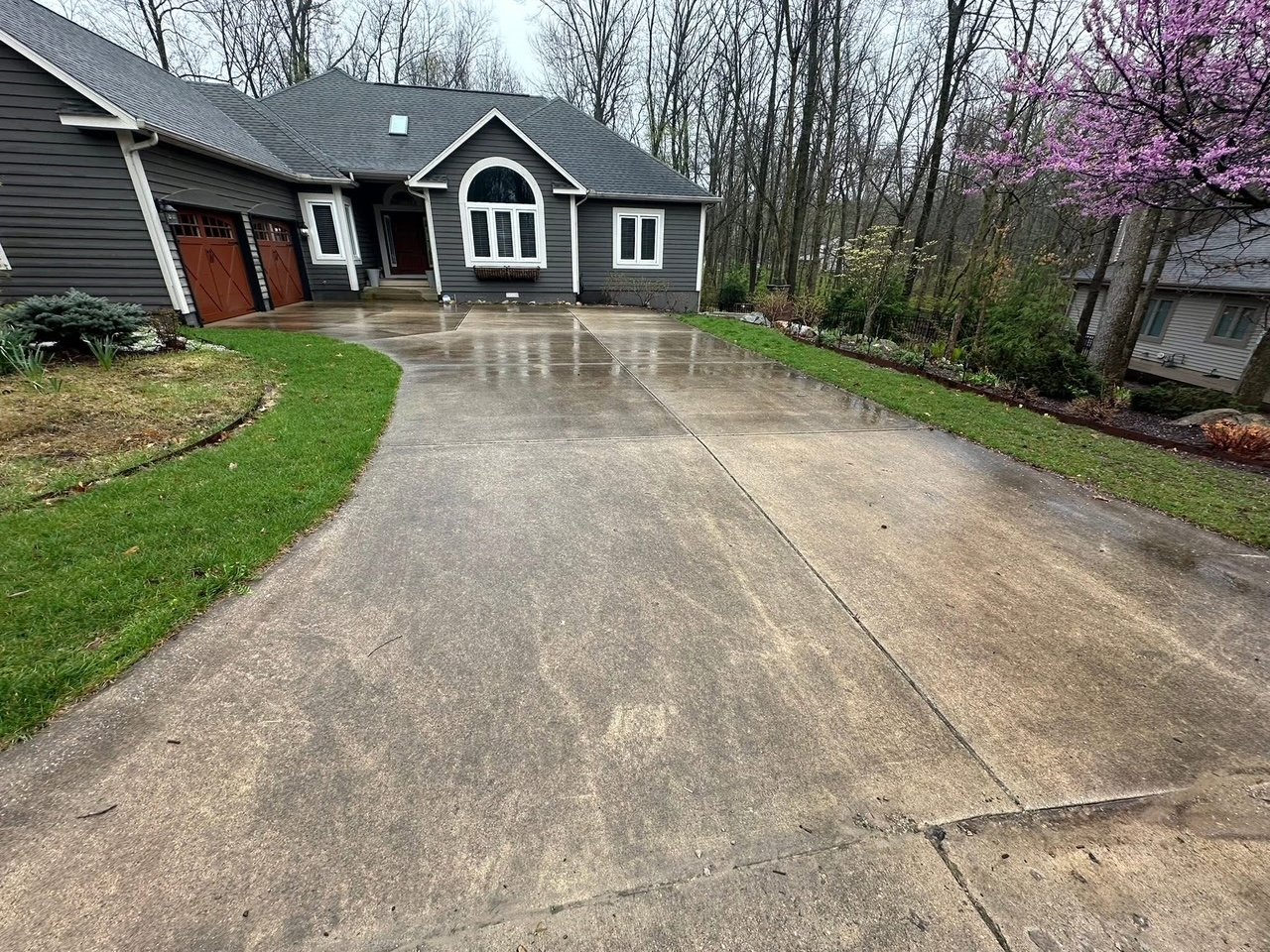
Before: Thick organic buildup
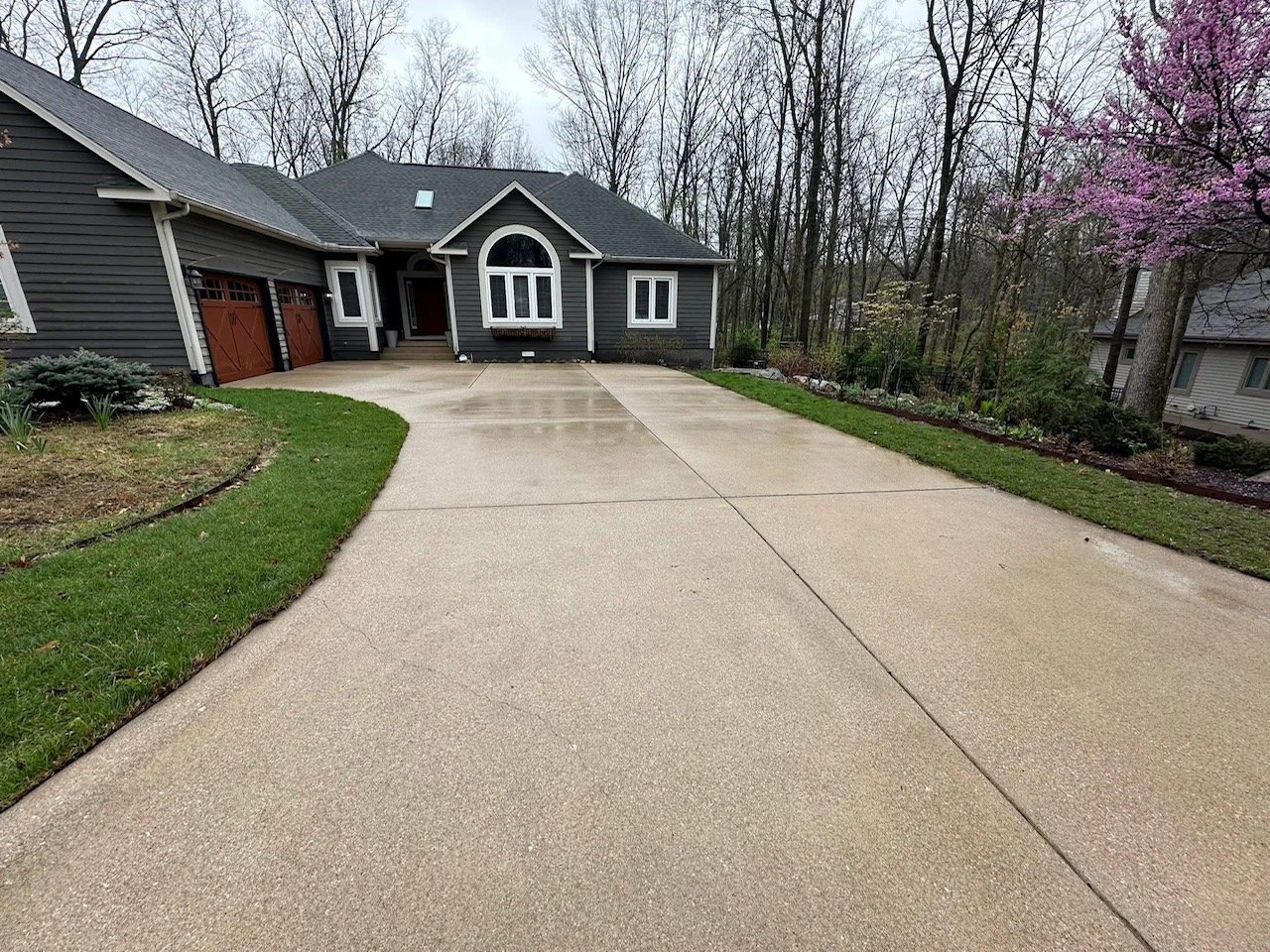
After: Restored and brightened concrete
Watch the Full Tutorial
Pro Tips for Success
- Always start from the highest point of the driveway and work downhill.
- Overlap circles to avoid stripes or localized buildup over time.
- Don’t skip the pre-treatment—it breaks down grime and helps your surface cleaner perform better.
- Post-rinse thoroughly—especially in cracks and seams where dirt collects.
- Include the sidewalk (to property limits) in your quote for a full curb appeal transformation.
Want to level up your pressure washing business? Dive into equipment, techniques, and business formation. We provide website building, hosting, and SEO packages to elevate your business.