
DIY 12V Softwash System Build: Affordable Chemical Application Setup
As you start your pressure washing business, incorporating soft washing can unlock new opportunities like roof treatments and delicate surface cleans. A 12V softwash system is a game-changer, allowing application of any chemical strength—from mild detergents to full-concentration SH—without your main washer. This affordable DIY build saves money, teaches maintenance skills, and boosts confidence in expanding services. Follow this guide to wire a simple circuit for reliable, portable performance on various jobs.
Why Build a 12V Softwash System?
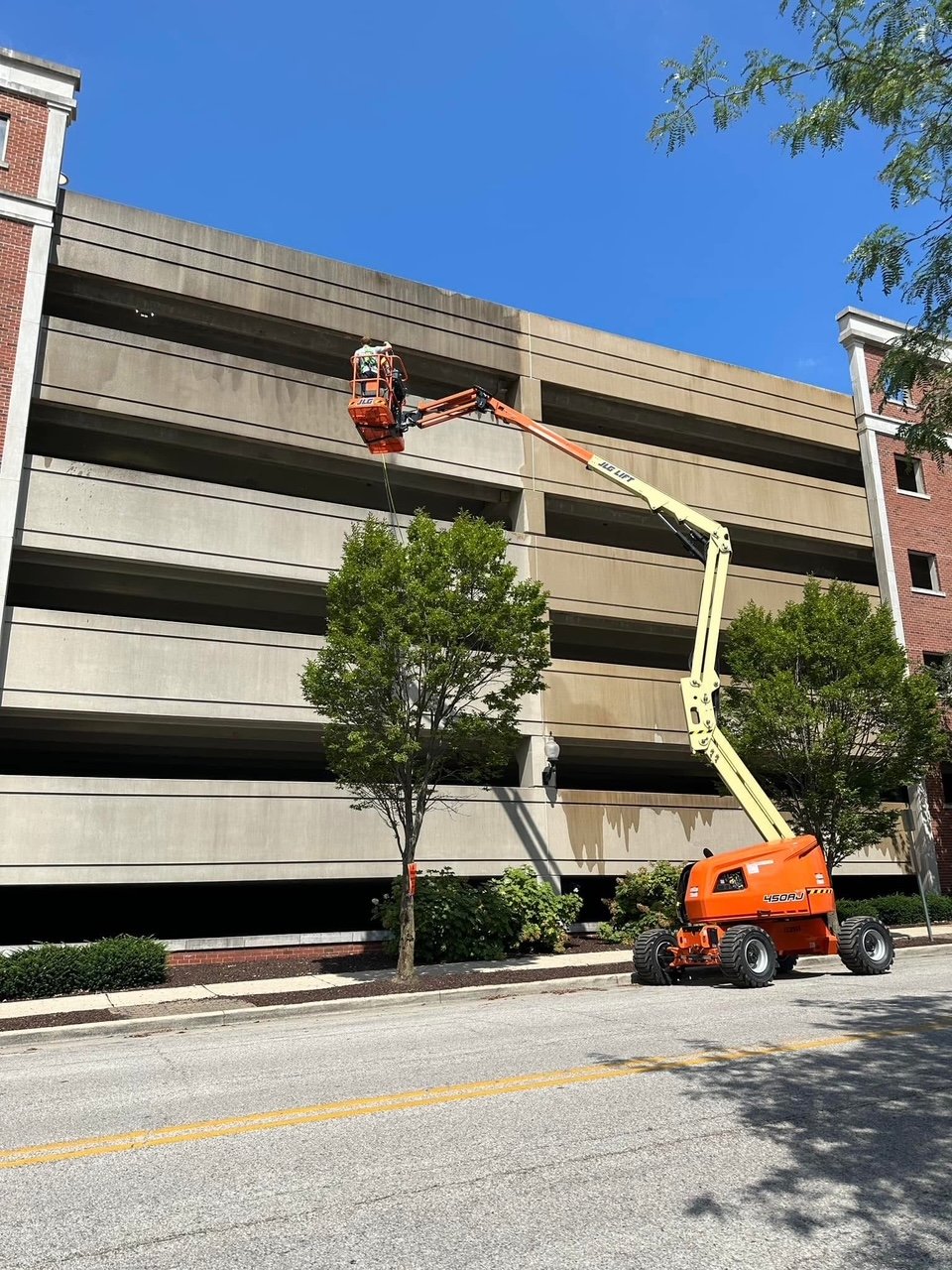
12V systems stand out for their ability to handle any chemical concentration, including SH from 0 to 12.5%, making them versatile for sensitive surfaces where high pressure risks damage. They're battery-powered, compact, and enable large-scale jobs without complex setups. Pros: Economical (~$200-300), customizable. Cons: Monitor battery; keep spares. Ideal for beginners to add value affordably. The job shown below—a massive parking garage exterior clean—was done with this exact DIY build, proving its power for big commercial work.
Parts List
- Remco Fatboy Pump
- Noco Genius Charger
- Circuit Breaker
- On/Off Switch
- 12V Deep Cycle Battery (ours) or Amazon Alternative
- 10Ga Wire
- Disconnect Pairs
- Ring Terminals
- Wire Strippers
- Battery Box
- Bulkhead Plug
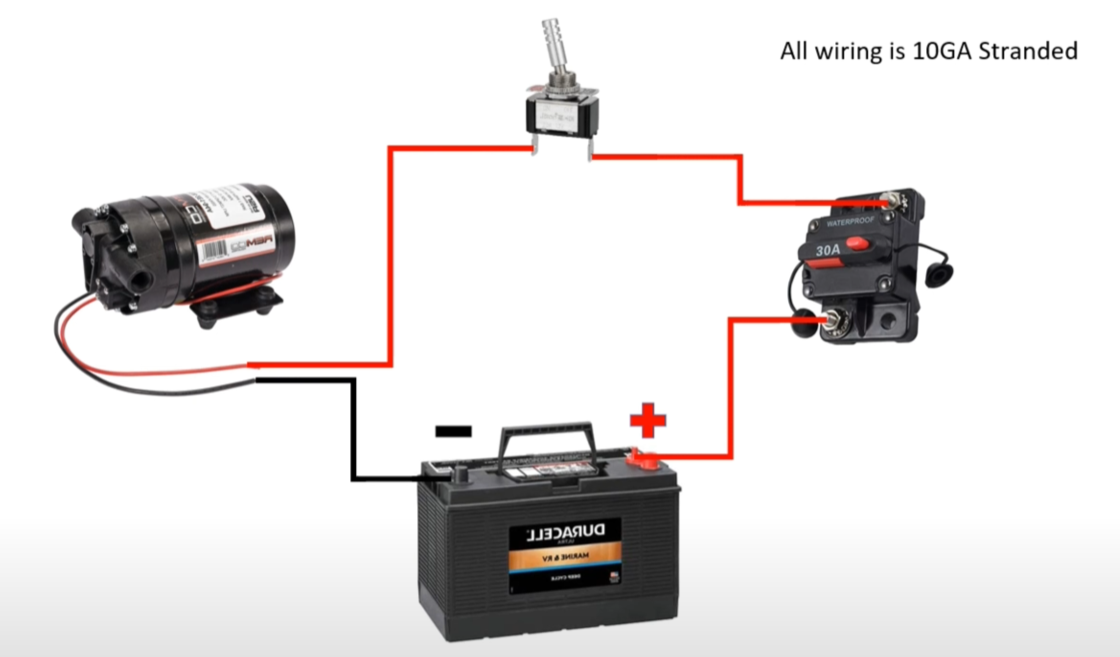
Wiring Diagram
Step-by-Step Build Process
This wiring creates a safe, efficient circuit for your pump using 10-gauge stranded wire (rated 30A for 24A max draw). Follow from transcript and standard practices:
- Select Battery: Use marine deep-cycle for stable 12V (100-30% charge). Ensures consistent pump flow (e.g., roofs/houses).
- Connect Positive: Run red wire from battery positive to circuit breaker line side (power in). Breaker acts as safety fuse—reset if tripped (e.g., short/overcurrent).
- Add Switch: From breaker load side, wire to on/off switch. Mount externally for quick access; leave breaker closed in operation.
- Wire to Pump: From switch, connect to pump's red lead. Use disconnect pairs for easy swaps; crimp ring terminals securely.
- Negative Wire: Run black wire from battery negative directly to pump's black lead—simple ground.
- Install Charger: Attach Noco Genius leads to terminals. Route cable to bulkhead plug for nightly charging—smart system maintains battery without overcharge.
- Test: Flip switch; pump activates on flow/pressure via relay/sensor. Verify consistent performance; use strippers for clean wires.
Color-code wires (red positive, black negative); label for maintenance. This setup handles any chemical strength, enhancing versatility.
Watch the Full Wiring Tutorial
Tips for Success
Keep spares (pump, wires) for reliability. Charge nightly for 2-3 job runtime. Avoid direct chemical-pump contact—use tanks. This DIY empowers maintenance knowledge, saving costs long-term.
Ready to learn more? Dive into equipment, techniques, and business formation. We provide website building, hosting, and SEO packages to elevate your business.