
Waterfed Pole Cart 2.0 Build: Lightweight Pure Water System for Spot-Free Cleaning
As you build your pressure washing business, incorporating window cleaning can open new revenue streams. A waterfed pole system delivers spot-free results by purifying water to a TDS (total dissolved solids) level below 10, ensuring streak-free drying without manual toweling. Our original cart (version 1.0) was dependable but heavy; this 2.0 version is optimized for portability with a lightweight aluminum cart, smaller DI resin tank, and downsized carbon filter. It maintains high performance for residential and commercial jobs while being easier to transport. Follow this guide to assemble yours and gain confidence in offering professional window cleaning services.
Cart Comparison: Version 1.0 vs 2.0
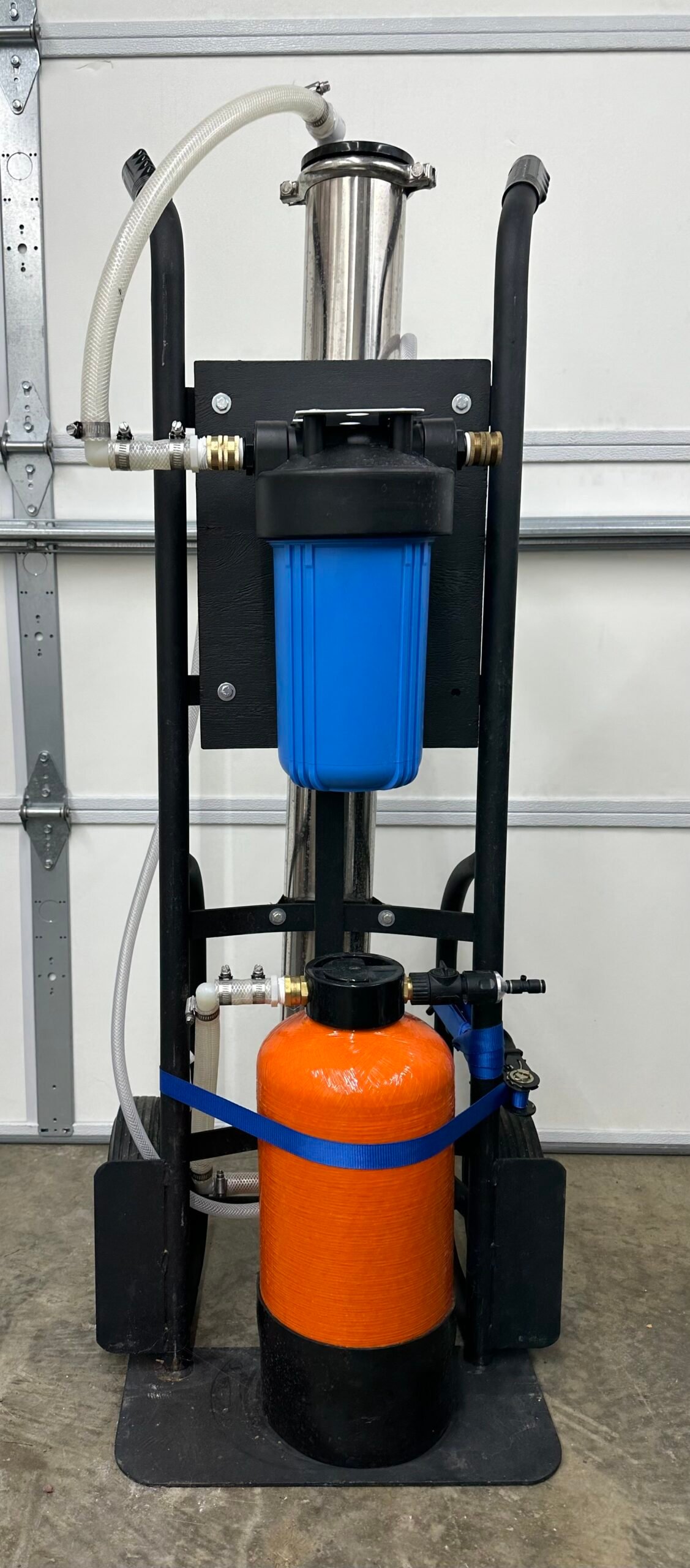
Version 1.0: Reliable but heavier design.
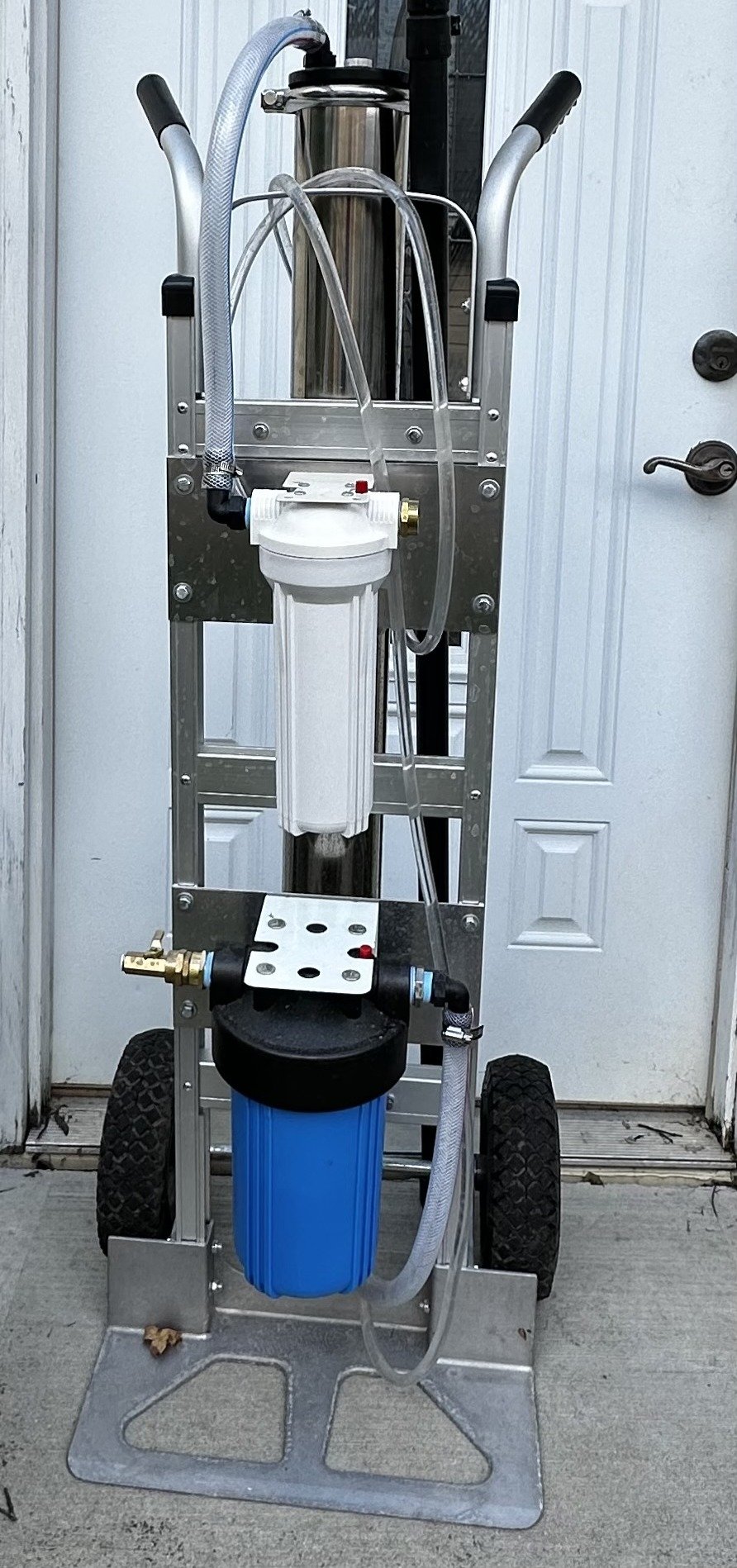
Version 2.0: Lighter with aluminum cart, smaller DI tank, and downsized carbon filter.
How the System Works: Reducing TDS for Spot-Free Results
The cart's purpose is to purify tap water, reducing TDS below 10 for spot-free windows. High TDS leaves mineral spots; low TDS ensures clean, streak-free drying. The multi-stage process includes:
- Charcoal (Carbon) Filter: Removes chlorine and sediments, prolonging RO membrane life by preventing chlorine degradation.
- RO Membrane: Forces water through a semi-permeable membrane, significantly reducing TDS (90-95%) by separating pure water from impurities. Clean water flows to DI; reject water discharges to the ground via a port.
- DI Resin Tank: Uses ion-exchange resin to remove remaining TDS: Positively charged ions (e.g., calcium) swap with hydrogen; negatively charged ions (e.g., chloride) swap with hydroxyl. These combine to form pure water, achieving TDS < 10.
Test output with a TDS meter; replace components when TDS rises.Typically, refreshing the DI resin for virgin resin will get TDS back down to sub 10.
Parts List
Main Components
- Two Wheel Cart
- 4040 Membrane Housing
- Axeon HF5 RO Membrane
- Cheaper RO Membrane
- Simpure 10" x 2.5" Filter Housing
- 10" x 2.5" Sediment Filter
- 10" x 4.5" Filter Housing
- 10" DI Cartridge
- Xero Ultra Valve (If sold out, swap for: Alternative 1 and Alternative 2)
Barbs and Fittings
- Banjo 3/4NPT to 3/4 barb elbow (3)
- 1/2" NPT Plug
- 3/4" MIP to 3/4" GHT bibb
- 1" NPT to 3/4" NPT Reducer
- 1" NPT to 3/4" GHT
- 1/2" NPT to 3/4" barb
- Aluminum Plates (2)
- 3/4" to 3/4" Barb Elbow
- 3/4" Male GHT to Male GHT
Hoses
Hardware
Tape and Sealant
Step-by-Step Build Process
This lightweight design improves portability while maintaining efficiency. Gather tools like a drill, wrench, heat gun, and Vaseline/silicone for assembly. Follow these steps or check out the YouTube video linked at the bottom:
- Assemble RO Membrane Housing: Lubricate O-rings on caps with Vaseline for sealing and ease. Insert Axeon HF5 membrane (or cheaper alternative) into 4040 housing. Secure caps hand-tight or snugly with wrench—avoid over-tightening to prevent damage.
- Fit Top Ports: Apply PTFE tape or sealant to threads. Add 3/4" barb elbow to outlet and 1/2" plug to center port.
- Fit Bottom Ports: For discharge, add hose bib valve (3/4" MPT to GHT with 3/8" barb adapter for optional hose). For clean water, use 1/2" NPT to 3/4" barb, connected to elbow routing to DI tank.
- Mount to Cart: Position RO housing on aluminum cart using pads for curvature. Secure with straps and 1/4-20 bolts, washers, nylon nuts through drilled holes. Ensure stability but keep lightweight.
- Mount Sediment Filter: Drill 4 holes in aluminum plate for bracket. Mount 10x2.5" housing; fit inlet (3/4" MPT to GHT female) and outlet (3/4" barb elbow). Insert sediment filter later.
- Mount DI Tank: Similar process: Drill plate, mount 10x4.5" housing. Inlet: 1" NPT reducer to 3/4" female + 3/4" barb. Outlet: 1" NPT to GHT + male-male GHT + 5/16" fitting with valve for flow control.
- Plumbing: Connect garden hose to sediment inlet. Run 3/4" braided hose from sediment outlet to RO top inlet. Jumper hose from RO bottom clean outlet to DI inlet (use heat gun for tight fits, secure clamps). Add 3/8" drain line to RO reject port. Outlet: 100' 5/16" tubing to pole with Xero Ultra Valve (or alternatives).
- Test and Calibrate: Run tap water through system. Adjust reject flow via valve for optimal ratio (e.g., 4:1 waste:pure). Check TDS meter—aim < 10. Monitor for leaks; fine-tune as needed.
This build prioritizes weight reduction for easier transport while ensuring robust purification. For more frequent use, check out the first pure water cart build. It's desgined to be used with garden hose pressure, 50 - 60 psi.
Watch the Full Build Tutorial
Ready to learn more? Dive into equipment, techniques, and business formation. We provide website building, hosting, and SEO packages to elevate your business.