
Quick Connect Fittings for Pressure Washers
Quick connect (QC) fittings are vital components in pressure washing setups, allowing for fast and secure connections between hoses, wands, nozzles, and machines. They come in various configurations, typically featuring 3/8" NPT (National Pipe Thread) on one end and 3/8" QC on the other, in male or female orientations. Below is a table outlining the four common types, their thread sizes, and uses.
Comparison Table: Types of Quick Connect Fittings
| Image | Description |
|---|---|
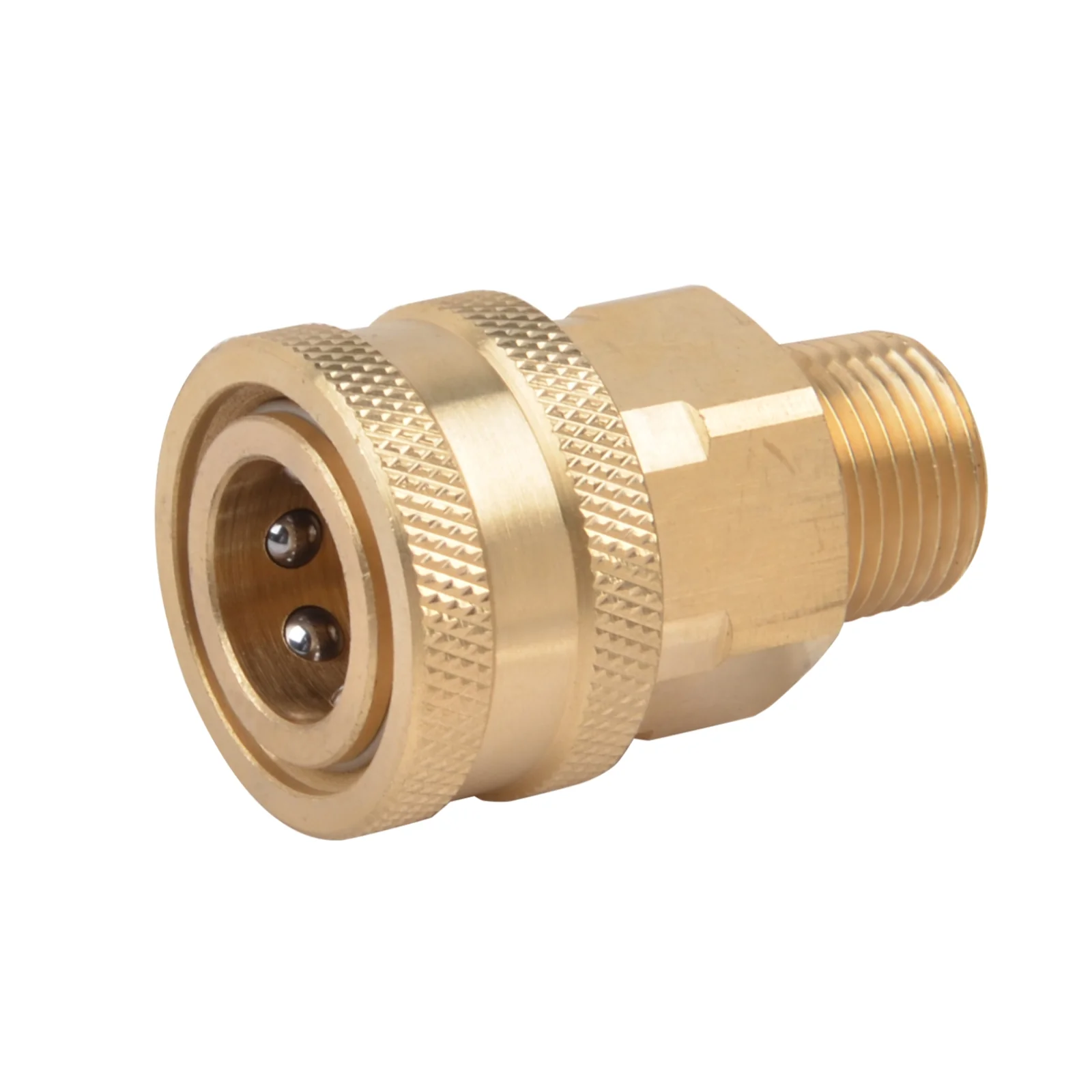 |
Male NPT to Female QC: - Thread size: 3/8" Male NPT. - Quick connect type: 3/8" Female QC. - Commonly used to connect a male-threaded component (like a pressure washer outlet) to a male QC hose or accessory. |
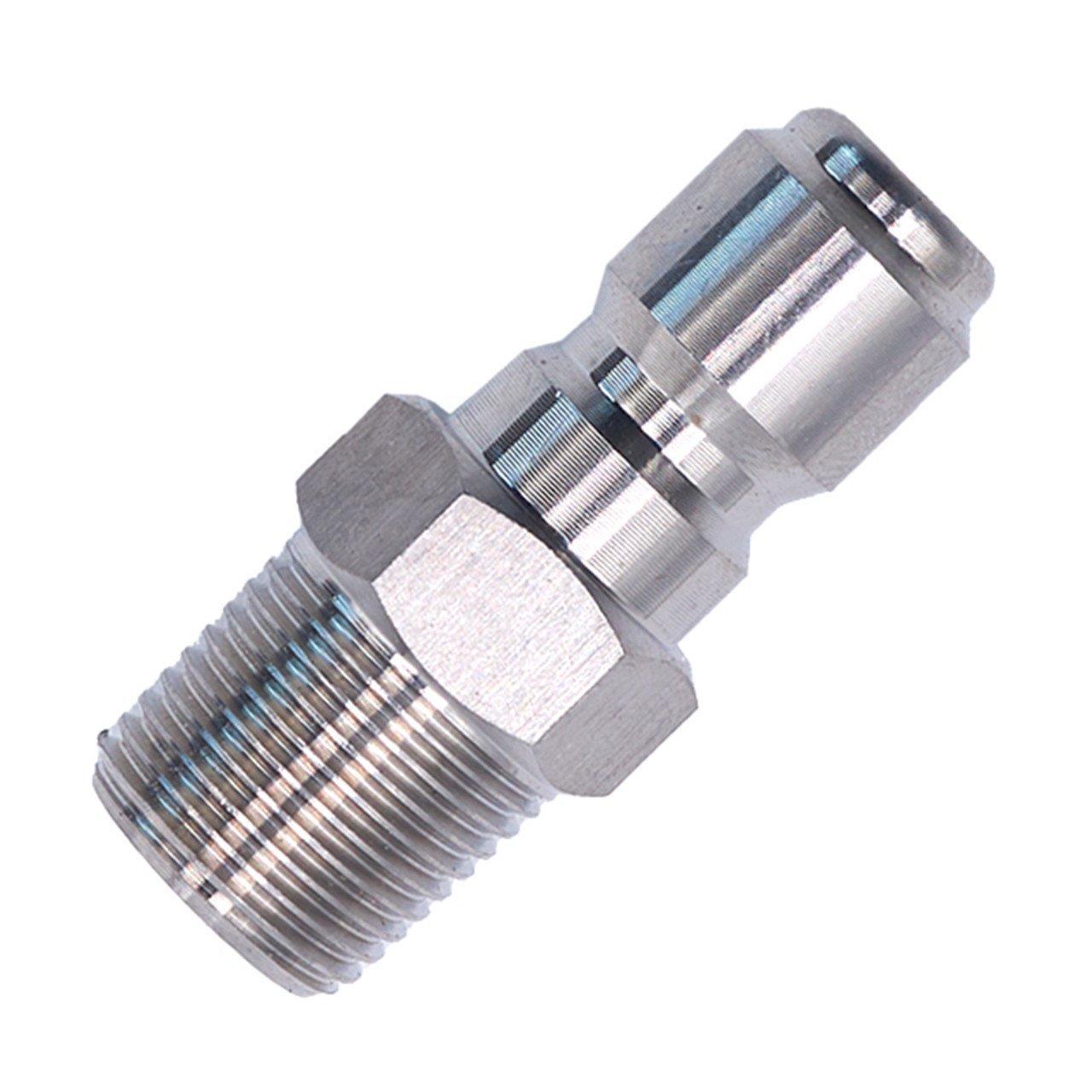 |
Male NPT to Male QC: - Thread size: 3/8" Male NPT. - Quick connect type: 3/8" Male QC. - Ideal for attaching to a female-threaded port and connecting to a female QC on hoses or tools. |
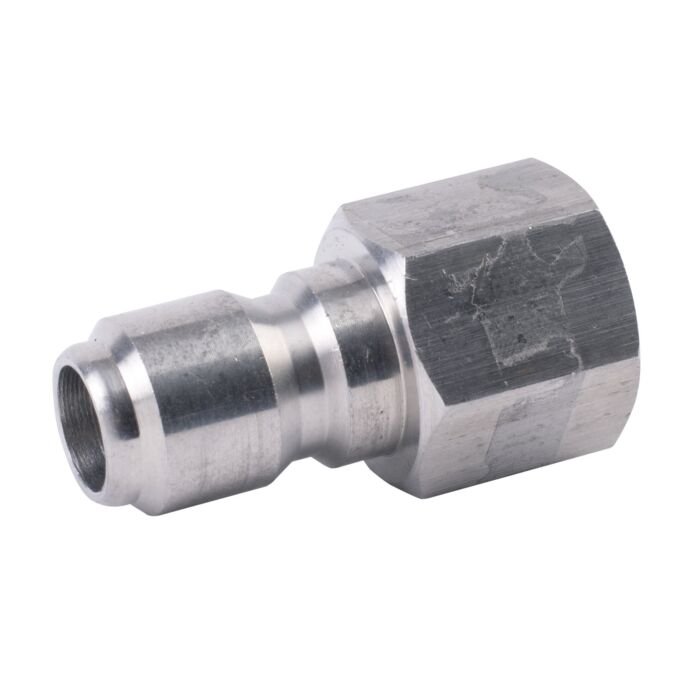 |
Female NPT to Male QC: - Thread size: 3/8" Female NPT. - Quick connect type: 3/8" Male QC. - Used to connect a male-threaded component to a female QC fitting on equipment. |
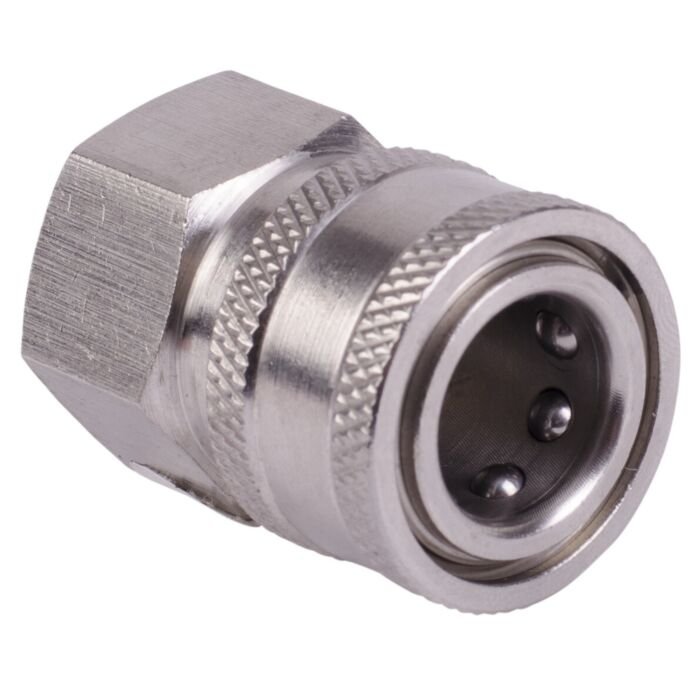 |
Female QC to Female NPT: - Thread size: 3/8" Female NPT. - Quick connect type: 3/8" Female QC. - Connects a male QC to a male-threaded accessory or machine inlet. |
All of the images shown above are stainless steel fittings except for the Male NPT to Female QC fitting, which is brass. Stainless steel offers superior resistance to corrosion and chemicals, such as sodium hypochlorite (SH) commonly used in pressure washing, compared to brass. This makes stainless steel a better choice for longevity and reliability in harsh environments.
Quick connect fittings interlock securely with an O-ring in the middle to create a watertight seal. However, this O-ring can degrade over time due to exposure to chemicals, age, or general wear and tear, leading to leaks. It's always a good idea to keep spares in your toolkit, along with a pick set to easily change them out. Consider using Viton O-rings, which are much more chemical-resistant than standard ones and will last longer. For 3/8" QC O-rings, check these: 3/8" QC O-Rings. For 1/4" O-rings used in nozzle quick connects, see: 1/4" O-Rings. A reliable pick set can be found here: Pick Set.
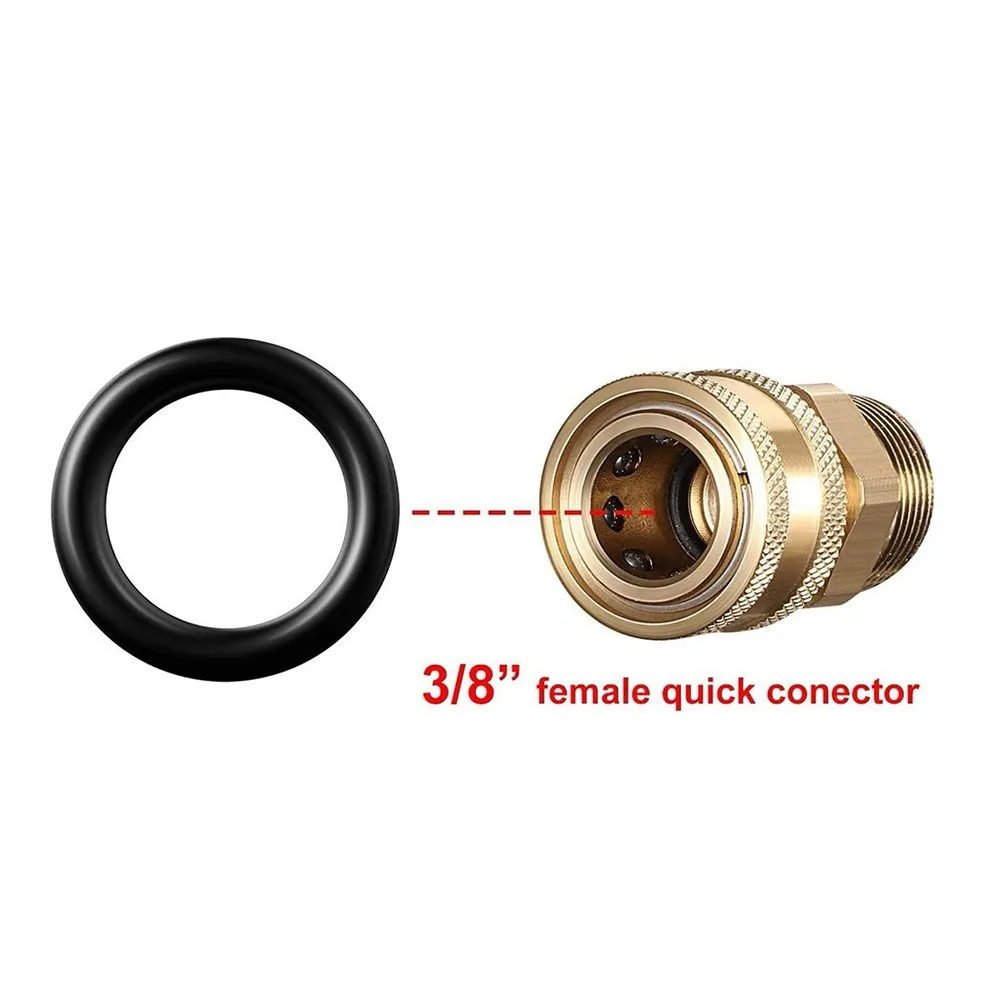
In pressure washing, 1/4-inch fittings are typically used for nozzles to allow precise control and quick changes. 3/8-inch and 1/2-inch fittings are used for hoses to handle higher flow rates. However, 1/2-inch fittings are generally only used for machines above 8 gallons per minute (GPM) to accommodate the increased volume without restricting flow.
How to Change Out O-Rings
Pressure Washing Hoses
Pressure washing hoses are critical for delivering water from your machine to the wand efficiently and safely. The most common size is 3/8-inch, which handles standard flow rates well for most residential and commercial jobs. However, if you're using high GPM (gallons per minute) pumps—typically above 8 GPM—then 1/2-inch hoses are normally used to reduce friction loss and maintain optimal pressure.
Advantages of Non-Marking Hoses
Non-marking hoses, often gray or light-colored, are designed to prevent leaving black streaks or scuff marks on surfaces like concrete driveways, sidewalks, or light-colored pavements. This is especially useful for professional cleaners who want to avoid callbacks or damage claims. They are made with a special outer cover that doesn't rub off rubber particles, making them ideal for sensitive areas.
1-Wire vs. 2-Wire Hoses
Pressure washing hoses come in 1-wire and 2-wire configurations, referring to the layers of steel wire braiding inside for reinforcement:
- 1-Wire Hoses: These have a single layer of wire braiding. Pros: Lighter weight, more flexible, easier to handle and coil, and generally less expensive. Cons: Less durable, with a lower burst pressure (typically around 4,000-5,000 PSI), making them more prone to kinking or failure under extreme conditions. We prefer to use 1-wire hoses for most jobs due to their ease of use, even though they aren't as durable.
- 2-Wire Hoses: These feature two layers of wire braiding. Pros: Higher burst pressure (up to 6,000 PSI or more), greater durability, and better resistance to abrasion and kinking. Cons: Heavier, stiffer, harder to maneuver, and more costly.
Most hoses carry a temperature designation, usually rated up to 250°F or 300°F. Be mindful of this if using a hot water burner, as exceeding the rating can cause hose failure, leaks, or safety hazards. Always check the specifications to match your setup.

Non-Marking Grey Hose: Ideal for preventing marks on light surfaces.

Blue Pressure Washing Hose: A standard option for general use, often 1-wire or 2-wire.